When we first met in Helsinki in 2012, we made a simple plan.
We would spend three years living in each of our home countries, the UK and Finalnd, and then decide where we wanted to build our future.
That was the plan.
But life, as it often does, moved faster.
By year two in the UK, we already had the arrival of our first child, this gave a new perspective to time and responility, we looked at the situation with much more vigor over just curiosity. When we began making side-byside comparions of the two countires education, welfare support and general life outlook, with our 12‑month‑old daughter in our arms, we already knew.
Finland felt like the place where our family would grow.
At the time, the decision was shaped by many things: the opportunity to build something on Kaisa’s 5th‑generation family farm, the idea of raising children in clean northern air, and a quieter life away from the intensity of London.
But what we didn’t fully understand yet was just how different family life itself would be.
A Different Way of Raising Children
When we moved to Finland in 2015, we expected the obvious differences — colder winters, deeper forests, quieter towns.
What we didn’t expect was how different everyday parenting would feel.
Of course, for Kaisa, returning home meant familiarity. She understood the culture, the language, and the system. For me, coming from the UK, it was a complete shift in perspective.
We were learning together — but from very different starting points.
And over time, raising children in Finland changed how we think about:
independence
safety
outdoor life
education
balance
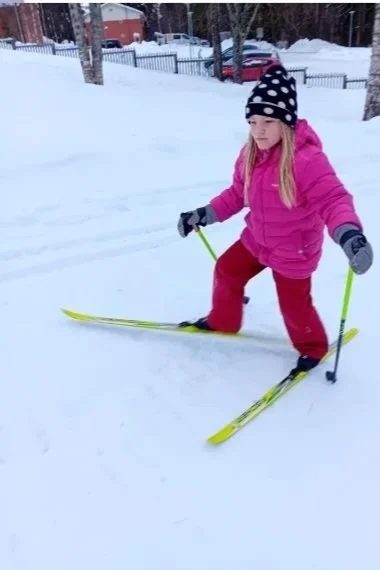
Our Ingrid learning to Ski at Päiväkoti (day care), starting at just 4 years old.
Independence Starts Earlier Than You Expect
One of the biggest surprises was how early independence begins.
In Finland, it’s completely normal for children to:
walk or cycle to school alone from around age 7
go to the local shop independently
spend time outdoors without constant supervision
Coming from the UK, this felt almost unbelievable at first.
There are no daily “school runs” with long queues of cars. No constant need to act as a taxi service. Children are expected — and trusted — to move through their environment independently.
Even in winter, cyling and walking to school from 7 years old independantyl even in –20°C or –30°C conditions.
School days are also shorter than in the UK, often starting between 8–10am and finishing between 12–3pm. Children learn to manage their own time , doing homework, playing, and gradually taking responsibility for their routines.
The result is something you notice quickly:
children grow confident, capable, and self‑reliant from a young age.
Safety Creates That Independence
Of course, that independence is only possible because of one key factor:
trust.
Finland consistently ranks among the safest countries in the world. Crime rates are low, communities are stable, and there is a strong sense of shared responsibility.
As parents, that changes everything.
You worry less about external risks and spend more time focusing on family life, work, and simply being present.
In many ways, this trust system creates a positive cycle:
children gain independence
parents gain time and peace of mind
society becomes more efficient and connected
Even something as simple as not needing to drive children everywhere has wider impacts — from family wellbeing to environmental benefits.
Outdoor Life Isn’t Optional — It’s Normal
Another major shift is how deeply outdoor life is built into childhood.
In Finland, children go outside every single day, regardless of weather.
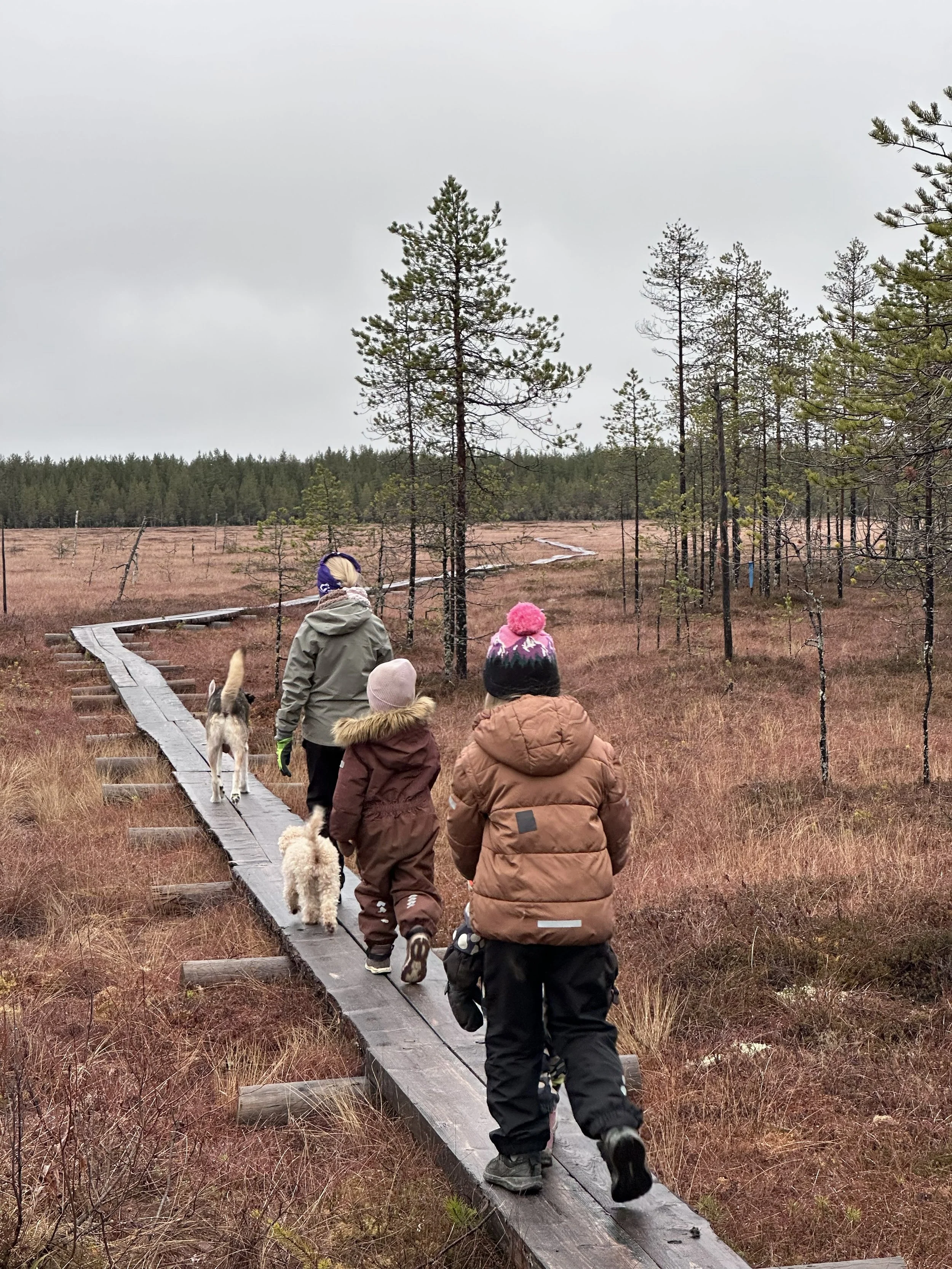
Rain, snow, freezing temperatures — it doesn’t matter.
In päiväkoti (daycare), outdoor play is part of the daily routine. With the right clothing (and there’s a lot of it), children learn to adapt naturally to the environment.
I still remember those first winters, seeing young children happily playing outside in deep snow and sub‑zero temperatures — something that would be unimaginable for many families in the UK.
But here, it’s normal.
And over time, you begin to understand why.
Children don’t see weather as a barrier — just a condition to adapt to.
Education: A Completely Different Philosophy
Perhaps the biggest cultural shift comes from the education system.
In Finland:
children start school at age 7, not 5
there are no school uniforms
school days are shorter
homework is lighter
formal testing comes later
At first, it can feel almost too relaxed — especially coming from a more structured and performance‑driven system like the UK.
But the philosophy is very different.
The focus is not on early academic pressure, but on:
wellbeing
creativity
social development
learning through play
Even in early primary school, children are encouraged to be children first.
And despite — or perhaps because of — this approach, Finland consistently ranks among the best education systems in the world.
The Financial Reality: Finland vs UK
One of the more practical — but important — differences is the financial side of raising children, the nuances above come after the move, but the costs are easier to see and evaluate, this is somthing we did in early 2015, built a excel spressheet and mapped out our monthly expenses and projected incomes for both countires, the decision from a financial perspective was clear.
Childcare Costs
In the UK, childcare can be extremely expensive. Full‑time nursery care can cost £1,000–£1,500+ per month per child, depending on location.
In Finland, childcare is heavily subsidised.
Päiväkoti fees are income‑based
Many families pay between €0–€300 per month per child
In some cases, it can be completely free
Family Benefits
Finland also provides structured support through :
monthly child benefit (lapsilisä) is Tax-free support paid by Kela for the maintenance of a child under 17 years of age, and its amount increases depending on the number of children. The benefit is paid from the month following the birth of the child, and single parents receive an increased benefit. An additional €26 increase is paid for children under 3 years of age.
for example child benefit amounts ( 2024):
1st child: €94.88/month
2nd child: €104.84/month
3rd child: €133.79/month
4th child:
€173.24/month
5th child and subsequent children: €192.69/month
Single parent increase :€63.30/month/child
the system is built for the people to encourage a good standard of living and to increase the popoulation. As a british person the ida was refreshing and almost mythical, the finacials looked reveresed. in the UK child rasing can literrally be like taking out a second mortgage. in finland, you are quite litterally paid to have more kids.
parental leave support (a big when from Craigs perspective, the leave in finland gave the opporuntiy for several months of leave, absolutely unthinkable in UK in 2015). although He didnt take any long term parental leave until our fourth child at 6months for 6 months, mostly due to us building our companies, the opportunity was there, and when it came it was a game changer.
home care allowance options - Home care allowance (kotihoidon tuki) in Finland is available to families with children under 3 years old not in municipal daycare, consisting of c care allowance (€377.68–€563.41+/mo), potential income-based care supplement, and municipal supplements. It is paid by Kela children under 3, and younger siblings, with tax deducted.
And of course, one of the most well‑known symbols:
The world first, finnish innovation, the Finnish baby box — a government‑provided starter kit for every newborn — something that reflects the broader philosophy of supporting families from the very beginning.
Compared to the UK system, Finland’s approach feels more universal, structured, and preventative, rather than reactive.
Nature Shapes Childhood
In Arctic Lakeland, nature isn’t something you visit — it’s part of everyday life.
Children grow up with:
forests just outside the door
lakes in every direction
skiing in winter
swimming in summer
berry and mushroom picking in autumn
For us, watching our children grow up here has been one of the most meaningful parts of the journey.
It’s a very different childhood from growing up in urban environments.
Seasons are not abstract concepts — they are lived, felt, and experienced fully.
The Challenges Are Real Too
Of course, it’s not perfect.
There are challenges.
long, dark winters
extreme cold
distance from extended family
language barriers, especially in the early years
the realities of rural life
Some days feel slow. Others feel intense — especially balancing family life with building businesses.
But over time, you adapt.
And many of those challenges become part of what makes the experience meaningful.
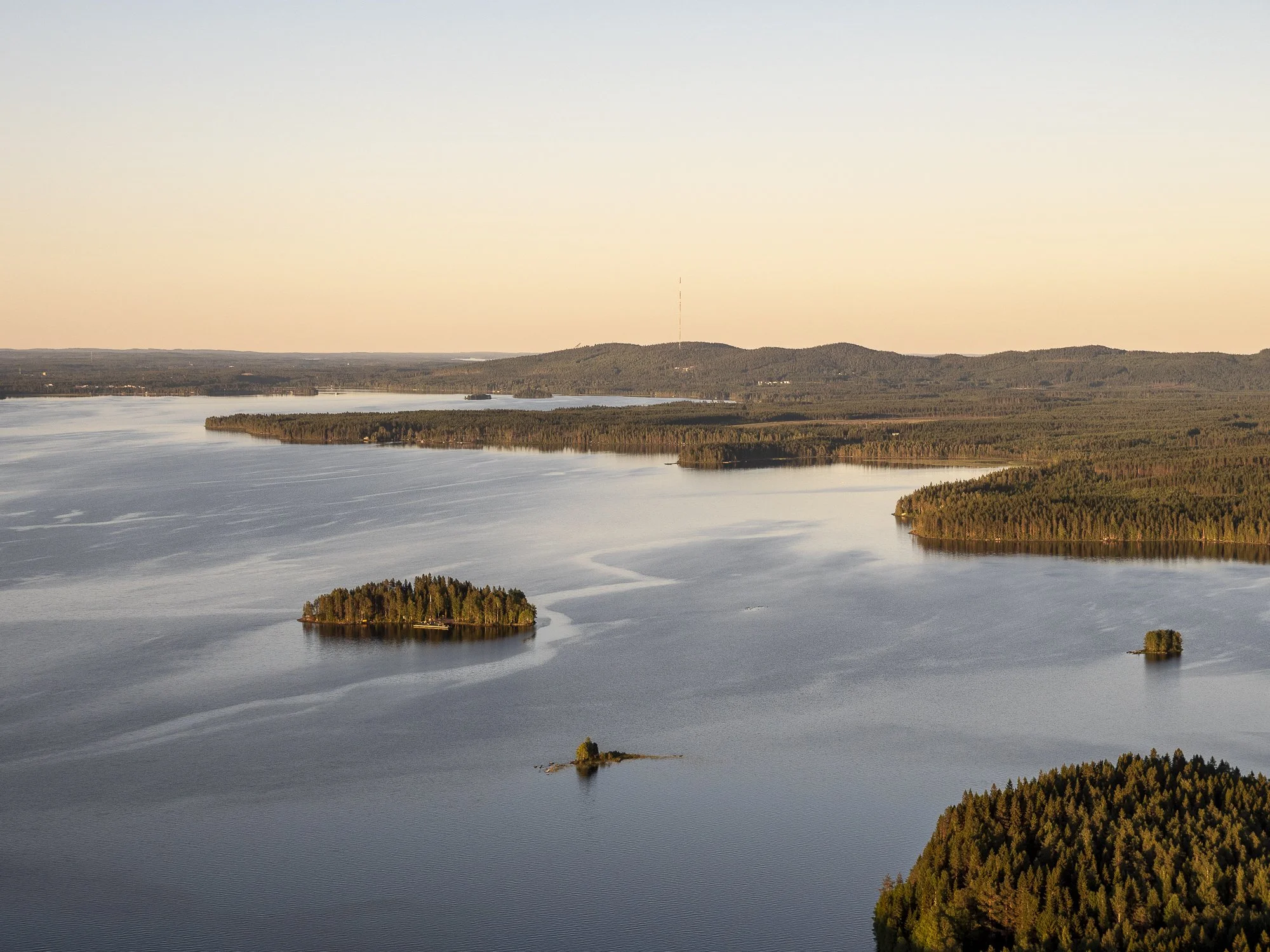
Safe to say, its pretty rural up here in the Arctic lakeland, which comes with its own pros and cons.
Why Finland Works So Well for Families
When you step back, you begin to see why Finland consistently ranks among the best places in the world to raise a family.
It comes down to a combination of factors:
independence from a young age
a strong sense of safety and trust
a balanced education system
access to nature
financial support structures
a culture that values time, not just productivity
It’s not about perfection.
It’s about balance.
What Surprised Us Most
Looking back now, after years of raising our family here, the biggest surprise isn’t any one system or policy.
It’s the overall feeling.
Childhood here feels slower.
Less rushed.
Less pressured.
More connected to the real world.
And as parents, that changes you too.
A Final Thought
Raising children in Finland has taught us something simple, but powerful:
Childhood doesn’t need to be rushed.
It can be slower.
More independent.
More connected to nature, to family, and to the rhythms of life.
And for us, here in Arctic Lakeland, that has made all the difference.